
In hospitality, sound is easy to overlook. Most guests will not walk into a restaurant, bar or hotel and comment on the speaker layout or audio system. However, they will notice when the space feels too loud, too harsh, too flat or simply uncomfortable to sit in.
That is why sound matters so much. It shapes mood, affects conversation, influences how long people stay and plays a bigger role in guest experience than many venues realise. When sound is handled well, the space feels more polished. When it is handled badly, even a beautiful venue can feel stressful or disconnected.
If you are planning a new venue, upgrading an existing one or trying to improve service flow and atmosphere, a well-designed commercial AV system can make a real difference.
Why sound matters in hospitality
Great hospitality is about more than food, drinks, interiors, or service. It is also about how a space feels.
Sound affects that immediately. In a busy venue, poor audio can make conversations difficult, staff communication harder, and the overall atmosphere more tiring than it should be. In quieter settings, weak or uneven sound can make a venue feel flat, awkward, or unfinished.
Over time, that affects more than ambience. It can influence customer comfort, dwell time, event usability, staff confidence, and even online reviews.
In other words, good sound is not just a technical extra. It is part of the guest experience.
What poor sound usually looks like
Most hospitality venues do not have a sound problem because they lack speakers. They have a sound problem because the system was never properly designed for the space.
That often shows up in familiar ways:
- music is too loud in one area and too quiet in another
- conversations become hard to follow
- the bar feels completely different from the dining area
- events need temporary workarounds
- staff struggle to adjust volume or sources quickly
- the space sounds harsh because of hard surfaces and poor coverage
These issues are common in restaurants, bars, boutique hotels, and event venues, especially when the technology has grown bit by bit instead of being planned properly from the start.
What a good hospitality sound system should do
A better hospitality audio system should not just make the venue louder. It should make the venue easier to use and more enjoyable to be in.
Support different moods across different spaces
A dining area usually needs a different sound profile from a bar, lounge, outdoor deck, or private event room. That is why multi-zone audio matters.
With a zoned system, you can manage different areas independently. That means separate volume levels, different source options, and more control over how each part of the venue feels throughout the day.
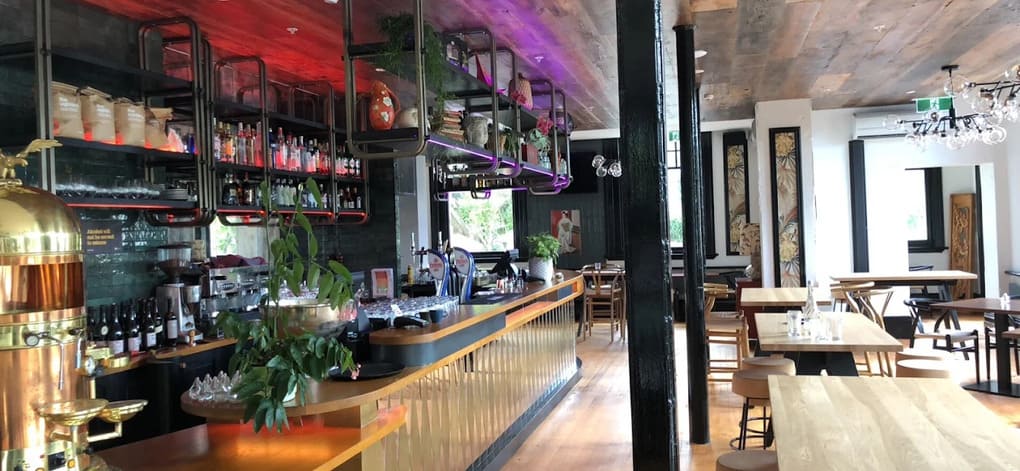
This approach is especially useful in venues like The Local Waiheke Island, where the bar and dining areas need flexibility without losing consistency.
Keep the system simple for staff
Hospitality systems need to work in real service conditions. If staff cannot switch sources, adjust volume, or manage zones quickly, the system becomes frustrating rather than helpful.
That is why ease of use matters just as much as sound quality. Wall plates, touchscreens, simple zone controls, and well-planned source options all help staff manage the environment without needing technical support.
Support more than everyday service
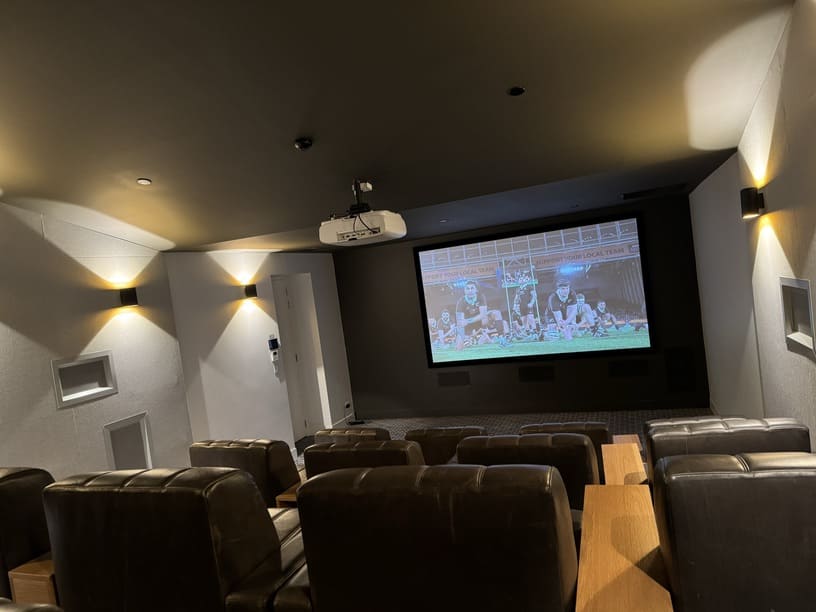
Many venues need to handle more than standard background music. They may also host private functions, live music, corporate events, speeches, or DJ sets.
A good system should make that easy. That might mean DJ inputs, microphone support, projector or display integration, and the ability to adapt the room without building a temporary setup every time.
That flexibility is a big part of what made 372 Waiheke Island work so well as both a restaurant and an event venue.
Fit the design of the space
The best hospitality technology usually feels almost invisible. Speakers, controls, displays, and AV infrastructure should support the design of the venue rather than interrupt it.
That is especially important in venues where atmosphere and visual identity matter just as much as functionality.
What we usually design into hospitality spaces
Every venue is different, but there are a few core features that come up again and again in hospitality AV projects.
Multi-zone audio
This is often the foundation. It allows different parts of the venue to run independently while still feeling part of one overall experience.
For example:
- the dining room may need softer, more even coverage
- the bar may need more energy and flexibility
- outdoor areas may need weather-rated speakers and different volume control
- private rooms may need a separate source for functions or events
Clear source control
Most venues need more than one audio source. That could include playlists, TV audio, DJ input, microphones, or streaming.
The key is making those sources easy to manage without overcomplicating the system.
Event-ready functionality
If the venue hosts launches, private dinners, weddings, or business functions, the audio system needs to support that cleanly. In many cases, that also means integrating displays, microphones, or wider audio-visual infrastructure rather than focusing on sound alone.
Reliable network and connectivity
For many modern venues, good sound is not enough on its own. Reliable Wi-Fi and network infrastructure also matter because streaming, controls, EFTPOS, guest experiences, and connected AV systems all depend on it.
That is one reason hospitality projects such as Clarence Tauranga work best when AV and connectivity are planned together rather than treated separately.
Common mistakes venues make
There are a few mistakes that come up often when hospitality venues try to improve their sound.
Installing speakers without designing the experience
A venue does not need random coverage. It needs the right sound in the right places.
Using one volume level for the whole venue
Different spaces need different moods. One-size-fits-all audio usually creates discomfort somewhere.
Ignoring staff usability
If controls are too complicated, staff will either avoid using them or make constant adjustments that create inconsistency.
Leaving events as an afterthought
If the venue may host events, functions, or live performances, that should be planned into the system from the start.
Treating AV and hospitality operations separately
In practice, they affect each other constantly. Sound, screens, microphones, source control, and connectivity all support the way the venue runs.
Real hospitality projects
If you want to see how this works in real venues, these projects are a good place to start.
At The Local Waiheke Island, Safe N Sound delivered a restaurant audio system with zoned control, flexible source selection, and a setup that supports both day-to-day service and event use.
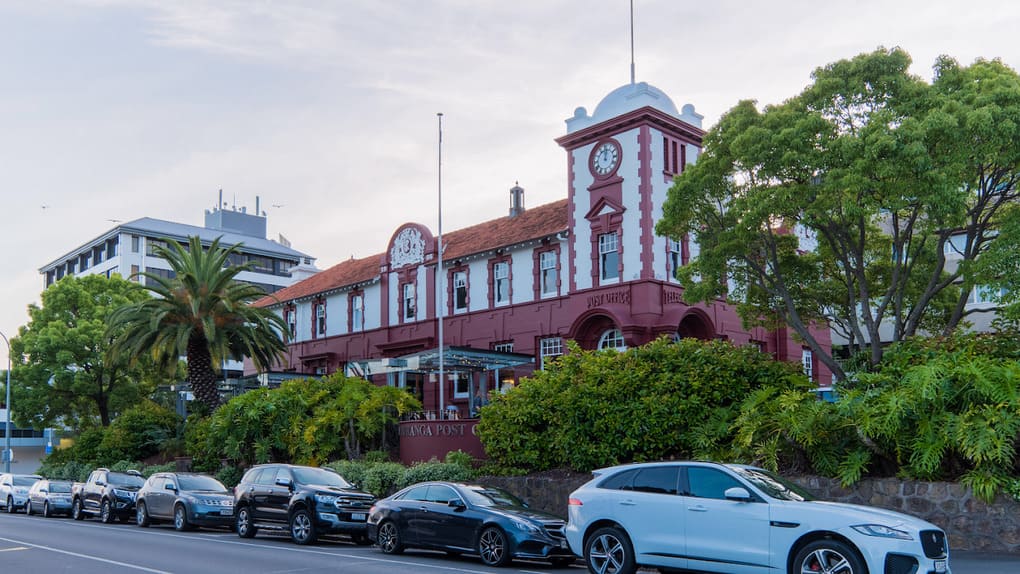
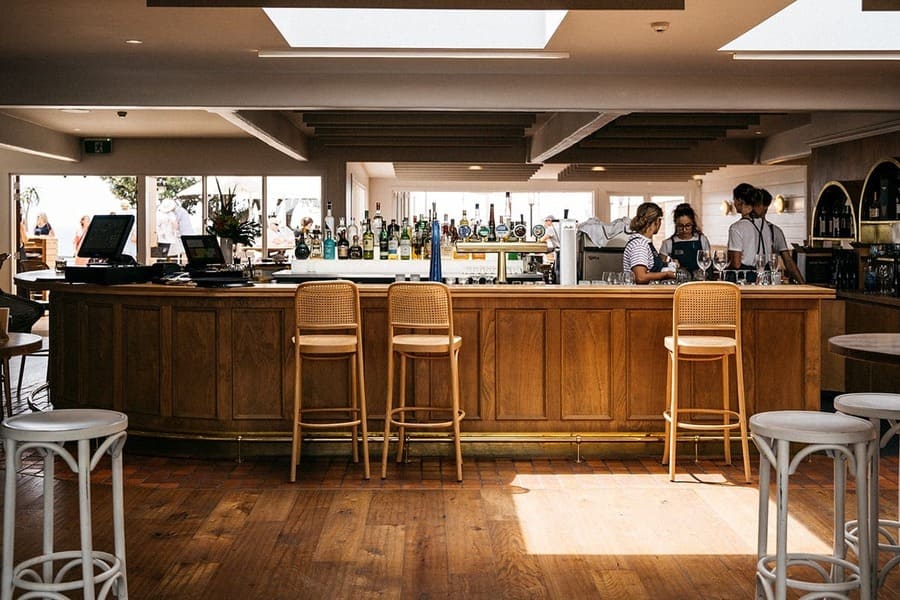
At 372 Waiheke Island, the focus was on creating a multifunctional hospitality environment with integrated audio, AV, and reliable network performance across both dining and event settings.
At Clarence Tauranga, the solution extended beyond restaurant audio to include hospitality AV, guest entertainment, conferencing, and venue-wide Wi-Fi across a more complex commercial environment.
Together, these projects show that hospitality sound is not just about speakers. It is about creating a venue that feels better, runs more smoothly, and supports the way guests and staff use the space.
Who this matters most for
This kind of planning is especially useful for:
- restaurant and bar owners
- boutique hotel operators
- café and venue operators
- hospitality groups and franchise brands
- architects and interior designers working on hospitality spaces
- builders and fitout teams involved in new venues or refurbishments
Whether the project is a new build, a renovation, or a targeted upgrade, the earlier sound and AV are considered, the better the outcome usually is.
Frequently Asked Questions
Planning a hospitality upgrade?
If your venue feels too loud, too uneven, or harder to manage than it should, the sound system may be a bigger part of the issue than you realise.
Safe N Sound works with hospitality venues to create sound and AV systems that support service, atmosphere, and day-to-day usability. That includes restaurants, bars, boutique hotels, event venues, and mixed-use hospitality spaces.
If you are planning an upgrade, a refurbishment, or a new venue, it is worth getting the sound right early.
Book a commercial consultation with Safe N Sound to discuss the sound, AV and connectivity requirements for your venue.






[…] In commercial environments, better AV design directly affects experience. For example, we have helped hospitality venues improve atmosphere and clarity with carefully planned sound systems, as outlined in Transform Guest Experience With Better Sound For Hospitality. […]