

A modern home can quickly become crowded with technology. Televisions, speakers, streaming devices, lighting controls, Wi-Fi equipment and multiple remotes may all work individually, but that does not mean they work well together.
Smart AV integration brings these systems into one coordinated setup. Instead of switching between apps and controls, homeowners can manage entertainment, audio and connected features through a simpler interface designed around how each room is used.
For a wider overview of how AV fits alongside lighting, security, blinds and automation, explore The Smart Home Technology Guide for NZ Homes. This article focuses specifically on how integrated audio-visual technology can improve entertainment, simplify control and reduce visible clutter.
What is smart AV integration?
Smart AV integration connects the audio, video and control systems throughout a home.
Depending on the property, this may include:
- televisions and projectors
- home theatre systems
- built-in and multi-room audio
- streaming devices
- lighting and motorised blinds
- touchscreens, apps and remotes
- home networking and Wi-Fi
- centralised AV equipment
The aim is not simply to install more technology. It is to make the systems easier to use together.
For example, instead of turning on the television, selecting a streaming device, adjusting the receiver, lowering the blinds and dimming the lights separately, a single Movie command can prepare the entire room.
1. Bring entertainment under one control
One of the clearest benefits of AV integration is replacing several disconnected controls with one consistent experience.
A homeowner may be able to manage the system through:
- one handheld remote
- a mobile app
- a wall-mounted touchscreen
- an in-wall keypad
- selected voice commands
The same interface can be used across different rooms, so the controls do not need to be relearned every time someone moves from the living room to the media room.
This is particularly helpful in households where children, guests or less technical family members also need to use the system. Good integration should make entertainment easier for everyone, not only the person who understands how the equipment is connected.
2. Create simple scenes for different activities
Smart AV systems can group several actions into scenes designed around everyday routines.
Movie night
A Movie scene could:
- turn on the television or projector
- select the correct streaming source
- activate the sound system
- lower the blinds
- dim the lights
Music
A Music scene could:
- turn on selected audio zones
- open a preferred streaming service
- set comfortable starting volumes
- play the same music across several rooms
Entertaining
An Entertaining scene could:
- play music through the kitchen, living and outdoor areas
- turn on feature lighting
- prepare selected displays
- keep quieter rooms on separate volume settings
The technology behind these scenes may be complex, but activating them should feel straightforward.
3. Enjoy audio throughout the home
Multi-room audio allows music to play through several areas without relying on portable speakers in every room.
Homeowners may choose to:
- play one playlist throughout the home
- listen to different audio in separate rooms
- control the volume of each zone independently
- include outdoor entertaining areas
- connect television sound to built-in speakers
- group or separate rooms as needed
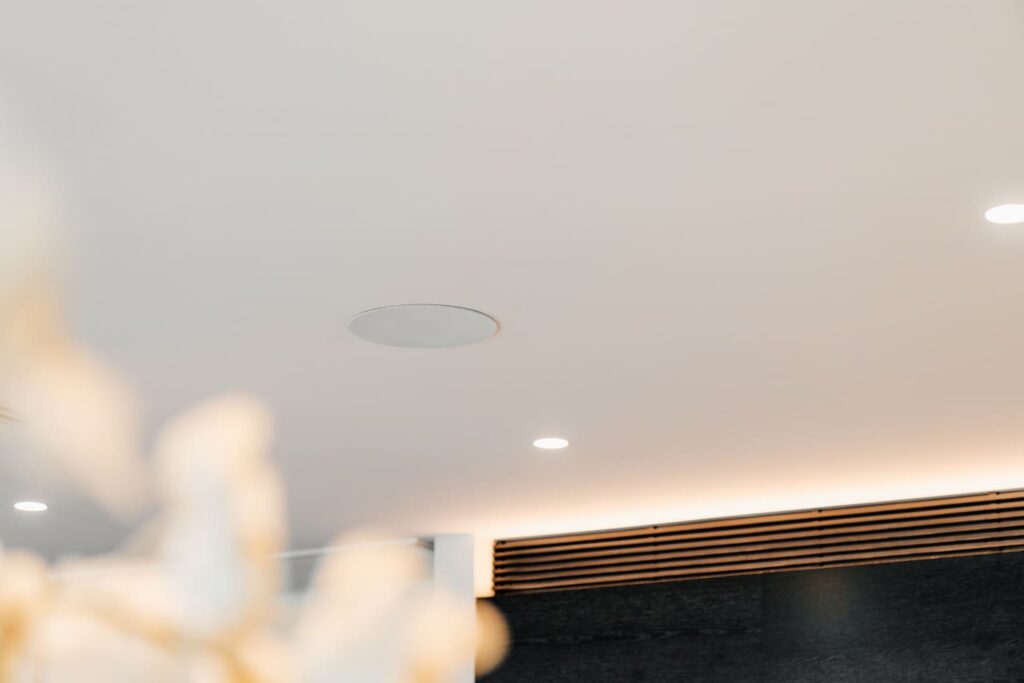
The speakers can often be integrated discreetly into ceilings, walls or cabinetry, helping the home maintain a cleaner appearance.
However, speaker placement still matters. More speakers do not automatically create better sound. The size, shape and materials of each room should influence the design so audio remains balanced and clear.
Safe N Sound’s audio-visual services cover residential home theatre and multi-room audio systems, including the design and integration of entertainment technology across connected spaces.
4. Keep technology from dominating the interior
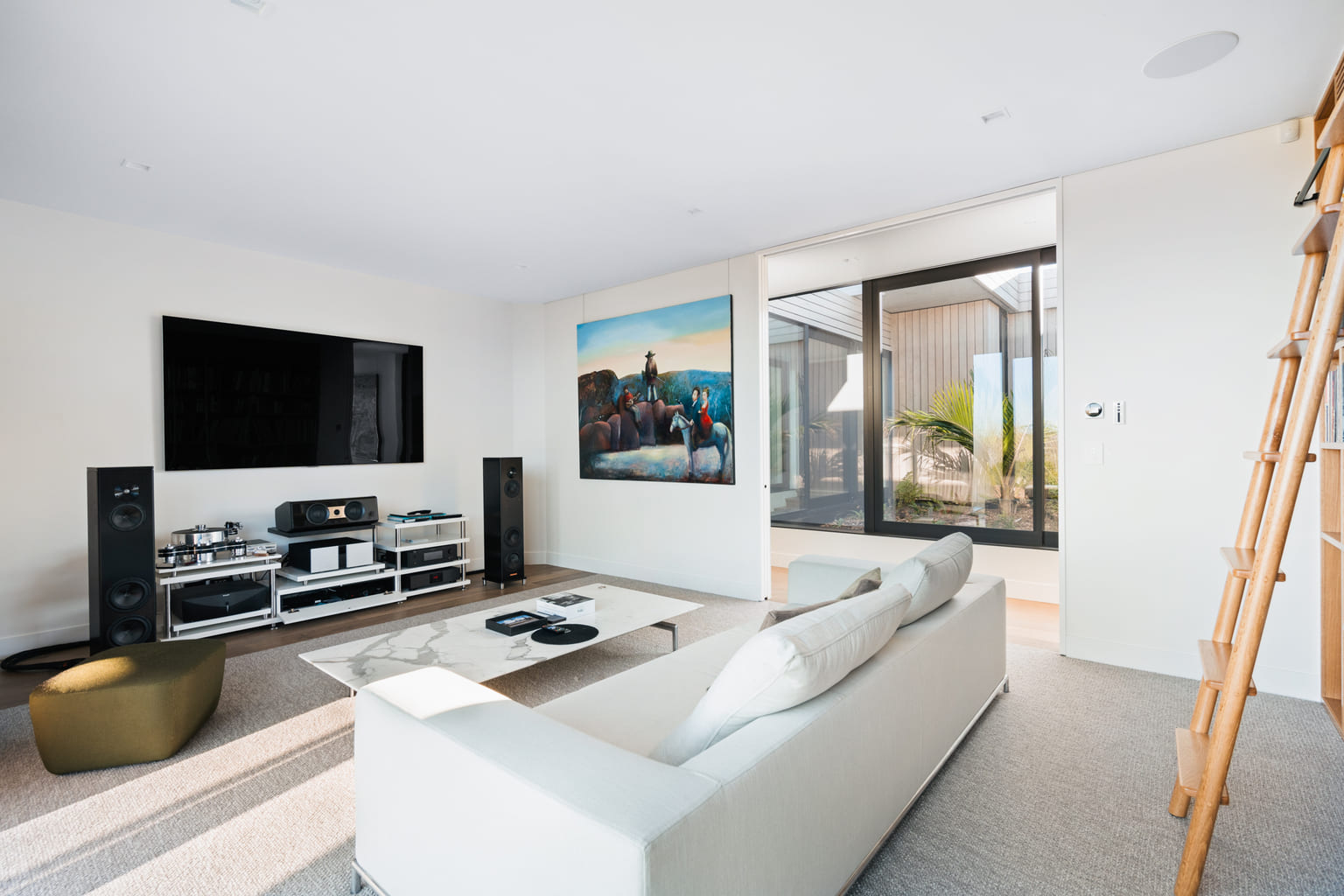
A well-integrated AV system should support the design of the home rather than compete with it.
That may involve:
- concealing television and speaker cables
- locating AV equipment in a dedicated rack or cupboard
- using built-in or discreetly positioned speakers
- selecting televisions that complement the room
- coordinating equipment locations with cabinetry
- reducing the number of visible remotes and devices
A Samsung Frame television, for example, can display artwork when it is not being used for entertainment. In other spaces, a television may be recessed, mounted within custom cabinetry or positioned so it feels intentional rather than added as an afterthought.
Early coordination with builders, architects and interior designers gives the project team more options for hiding equipment and protecting the visual design.
5. Build a reliable foundation with better networking
Streaming, app control and connected AV devices depend on a stable home network.
Weak Wi-Fi can cause:
- buffering during films or music
- slow control responses
- devices dropping offline
- unreliable streaming between rooms
- frustration when mobile apps cannot find equipment
A smart AV project should therefore consider networking from the beginning.
That may include:
- properly positioned wireless access points
- wired network connections for fixed equipment
- reliable coverage across indoor and outdoor areas
- suitable network capacity for streaming and connected devices
- an organised central equipment location
Wi-Fi is not a decorative extra within an integrated home. It is part of the infrastructure that helps the wider system perform reliably.
6. Tailor each room to how it is used
Different rooms need different AV experiences.
Living rooms
The main living area may need television, built-in audio and controls that remain easy for everyday viewing.
Media rooms
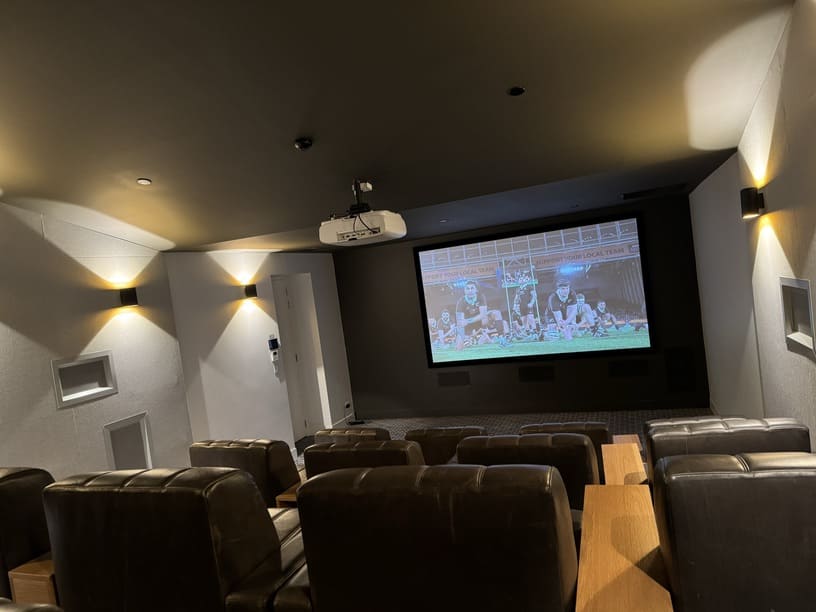
A dedicated media room may include surround sound, a larger display or projector, controlled lighting and automated blinds.
Kitchens and open-plan areas
These spaces often benefit from discreet audio that can support daily listening and entertaining without dominating conversation.
Bedrooms
A bedroom setup may prioritise simple television control, softer lighting and lower-volume audio.
Outdoor spaces
Outdoor entertaining areas need speakers and equipment suited to the environment, along with convenient control from inside or outside the home.
Planning room by room avoids forcing the same solution into every part of the property.
Why planning smart AV early matters
The ideal time to plan an integrated AV system is during the early stages of a new build or renovation.
Early planning makes it easier to coordinate:
- speaker and television locations
- electrical outlets
- network cabling
- equipment racks
- lighting controls
- motorised blinds
- cabinetry and interior finishes
- future upgrade routes
When AV decisions are left until the end of the project, homeowners may face visible cabling, limited equipment locations or additional work to achieve the intended result.
Existing homes can still be upgraded, but the solution may use a combination of existing cabling, carefully planned new wiring and wireless technology.
Avoid building a collection of disconnected devices
A common approach is to buy each piece of technology independently and try to connect everything later.
That can lead to:
- too many apps
- incompatible products
- several remotes
- inconsistent controls
- duplicated equipment
- systems that are difficult to expand
- limited technical support when something goes wrong
An integrated system begins with the intended experience and then selects technology that can support it.
Useful questions to answer early include:
- Which rooms need audio or video?
- Who will use the system?
- Do guests need to operate it?
- Which controls should remain physical?
- Will the system connect with lighting or blinds?
- Is remote access important?
- What might be added in future?
This creates a clearer plan than choosing products based only on individual features.
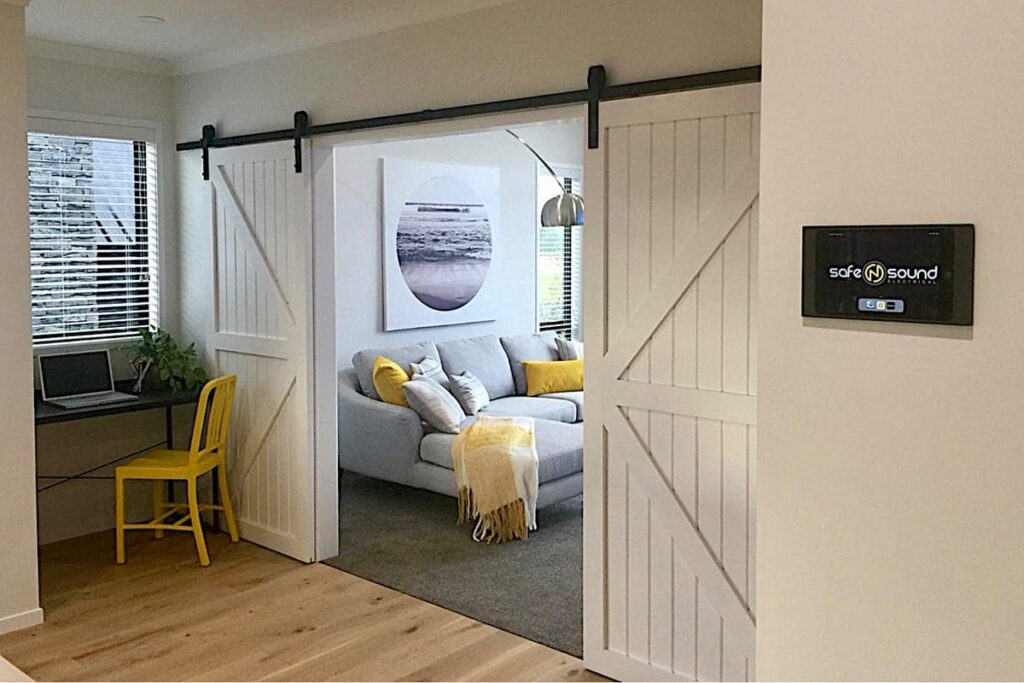
A real example: Precision Homes Paerata Rise
The Precision Homes Paerata Rise project shows how smart AV can be designed into a new home from the beginning.
Safe N Sound integrated Control4 automation, automated lighting, Sonos audio, Samsung Frame televisions and whole-home Wi-Fi into one coordinated residential system. The technology was designed to complement the interior while giving the homeowner straightforward control over entertainment, lighting and connected features.
The project demonstrates the value of treating AV, control and connectivity as one part of the home design rather than installing each system separately after construction.
Is smart AV only for large or luxury homes?
No. The scale of the system can be matched to the property and the homeowner’s priorities.
A smaller setup might focus on:
- simplifying the main television area
- adding audio to the kitchen and outdoor space
- improving Wi-Fi
- replacing several remotes with one
- creating a single entertainment scene
A larger system may connect AV across the whole home and integrate it with lighting, blinds, security and climate control.
The value comes from making frequently used technology more reliable and easier to operate, not from installing the greatest possible number of devices.
FAQs: about smart AV integration
Create a Home That Is Easier to
Smart AV integration is not about filling a home with visible technology. It is about making entertainment simpler, improving sound and connectivity, and helping different systems work together naturally.
The strongest result comes from planning the experience first, then designing the audio, video, controls and network around how the household actually uses each room.
Planning a Smart AV Upgrade?
Safe N Sound can help coordinate audio, televisions, home theatre, lighting controls and networking for a new build, renovation or existing home.
Book a residential consultation to discuss an AV system that is simpler to control, discreetly integrated and designed around the way you live.






[…] Our audio-visual services cover everything from home theatre and multi-room audio to commercial AV fit-outs. If you would like to see what this looks like in practice, have a look at our article on Transforming Your Home With Powerful Smart AV Integration. […]
[…] a big part of the solution is simplifying control. This is the same principle we talk about in Transform Your Home with Powerful Smart AV Integration: when control is clean and centralised, the whole system feels easier to live […]