The way people work has changed. Across Auckland and wider New Zealand, more businesses now rely on hybrid meetings, remote teams, and client calls that happen across different locations. That shift has made video conferencing more than just a convenience. For many workplaces, it is now part of everyday operations.
When it works well, video conferencing helps teams communicate clearly, collaborate faster, and make better use of time. When it works badly, it creates frustration, delays, and meetings that feel harder than they should. If you want a broader view of how meeting rooms, room booking, and workplace technology fit together, Workplace Management Solutions for Modern NZ Offices is the best place to start. This article looks more specifically at how video conferencing supports productivity and collaboration in modern workplaces.
Why video conferencing matters more now
For many businesses, video conferencing is no longer just for occasional catch-ups. It now supports internal meetings, client presentations, training sessions, remote collaboration, and communication across multiple locations.
That matters because today’s workplaces need more flexibility than they did before. Teams may be partly in the office and partly remote. Clients may be in another city or another country. Decision-making still needs to happen quickly, and communication still needs to feel clear and professional.
A good video conferencing setup helps make that possible.

How Video Conferencing Improves Productivity and Collaboration
When the setup is designed properly, video conferencing can remove a lot of the friction that slows teams down.
Better communication
Face-to-face communication still matters, even when it happens through a screen. Video helps people read expressions, follow discussion more easily, and stay more engaged than they often would on a voice-only call.
Stronger collaboration
Modern video conferencing setups often support screen sharing, content display, document review, and clearer room audio. That makes meetings more interactive and helps teams work through information together rather than speaking around it.
Time and cost savings
Video conferencing reduces the need for unnecessary travel between offices, client sites, and training sessions. It also makes it easier to bring the right people into a meeting without the delay of coordinating physical attendance.
Better consistency for hybrid teams
A well-designed meeting room gives remote participants a clearer view of the room, better audio and a more equal opportunity to contribute. That is increasingly important for businesses managing hybrid work patterns across Auckland and New Zealand.
What usually goes wrong with workplace video conferencing
Many businesses do not struggle because they lack conferencing tools. They struggle because the overall setup has not been properly considered.
The most common issues are:
- poor audio that makes conversations hard to follow
- weak cameras or poor screen visibility
- unreliable internet or network performance
- rooms that are awkward to use
- too many cables, remotes, or confusing controls
- meetings starting late because the technology is not ready
Video conferencing should not be treated as just another device in the room. It works best when it forms part of a wider workplace management and commercial AV strategy, where room design, controls, connectivity and day-to-day use are considered together.

What makes a good video conferencing setup
A strong workplace video conferencing solution should feel simple for the people using it.
That usually means:
Clear audio and video
If people cannot hear or see properly, the meeting loses momentum very quickly. Good room audio and camera quality make a major difference.
Easy content sharing
Teams should be able to present, review documents, and switch between speakers without unnecessary delays.
Suitable room acoustics
Hard surfaces, background noise and echo can make speech difficult to understand, even when the microphones and speakers are good. The room itself should therefore be considered alongside the conferencing equipment.
Simple controls
The best systems do not require a technical expert every time someone starts a meeting. Staff should be able to walk in and use the room confidently.
Reliable connectivity
A video conferencing system is only as strong as the network behind it. Stability matters just as much as the equipment in the room.
A setup that suits the room
A small huddle space needs something different from a large boardroom or training room. The technology should match the way the room is actually used.
Choosing the right solution for your business
There are many video conferencing platforms available, including Microsoft Teams, Zoom, Google Meet, and Webex. However, choosing the right platform is only part of the decision.
Businesses also need to think about:
- team size
- room size
- current infrastructure
- budget
- compatibility with existing tools
- ease of use for staff
- future growth
The right solution is not always the most expensive or feature-heavy. It is the one that works reliably in your environment and makes everyday meetings easier.
Businesses should also decide whether rooms need to support one standard platform, such as Microsoft Teams, or allow staff and clients to join meetings across several platforms. That choice can affect the room hardware, controls and overall user experience.
Why proper design matters
This is where many businesses can save themselves a lot of frustration.
A video conferencing room is not just a screen and a camera. It is a space where people need to communicate clearly, share ideas, and move through meetings without technical disruption. If the room is badly designed, even strong equipment can feel awkward to use.
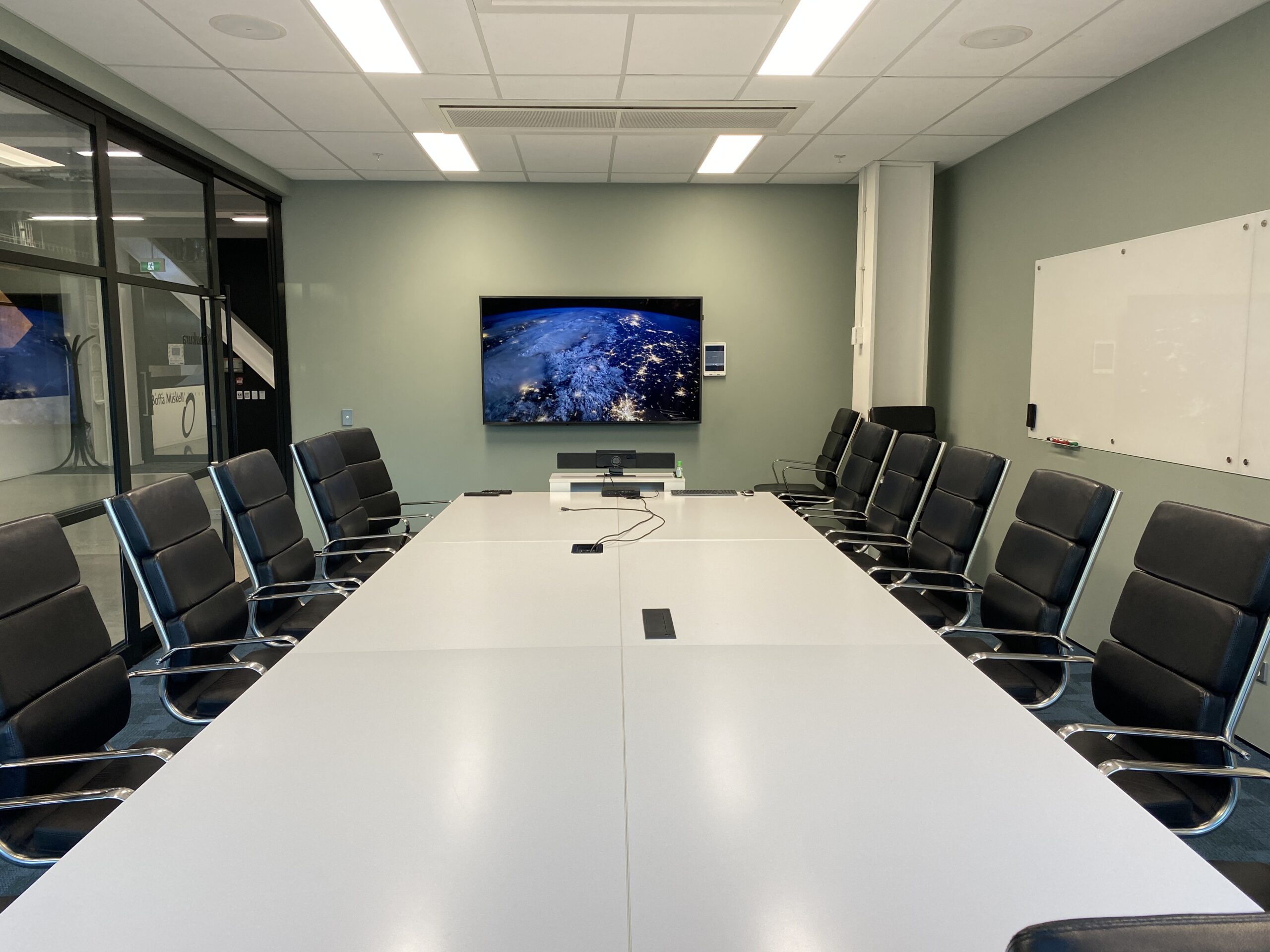
A project like Boffa Miskell Christchurch shows how this works in practice. In that office, conferencing technology, displays, control systems, and shared spaces were designed to support both hybrid meetings and day-to-day collaboration. That kind of joined-up approach usually creates better results than simply adding devices into the room one by one.

Common mistakes businesses make
A few issues come up again and again.
Choosing hardware before understanding the room
Different spaces need different setups. A boardroom, training room, and small meeting space should not all be treated the same.
Underestimating audio quality
Poor sound is often more disruptive than poor video. If people cannot hear clearly, the meeting breaks down quickly.
Ignoring the network
A weak network can undermine the whole system, no matter how good the camera or display is.
Making the room too hard to use
If staff are unsure how to start a call or share content, the system becomes a barrier rather than a tool.
Treating video conferencing as separate from the wider workplace setup
Meeting room technology works better when it is considered alongside room use, control, scheduling, and the wider office environment.
Frequently Asked Questions
Final thoughts
Video conferencing has become part of how modern businesses communicate. When it is planned properly, it helps teams work more smoothly, collaborate more effectively, and avoid the small technical frustrations that waste time and energy in everyday meetings.
For Auckland and New Zealand workplaces, the real goal is not just to install video conferencing. It is to create meeting spaces that are easy to use, reliable, and suited to the way people actually work.
Planning a Video Conferencing Upgrade?
Safe N Sound can assess your meeting rooms, conferencing platforms, audio, displays, controls and network requirements before recommending a solution that fits the way your team works.
Book a workplace consultation to discuss a reliable, easy-to-use video conferencing setup for your business in Auckland or elsewhere in New Zealand.